Tuesday, 31 March 2020

Monday, 30 March 2020
Sunday, 29 March 2020
Friday, 6 December 2019
This new technology could save the nuclear industry in trouble.
Small nuclear reactors, financed by investors like Bill Gates, appear in the US as cheaper, safer alternatives to traditional designs of nuclear power plants
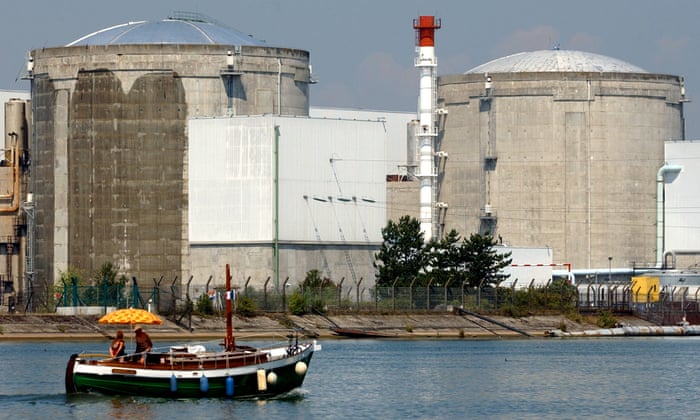
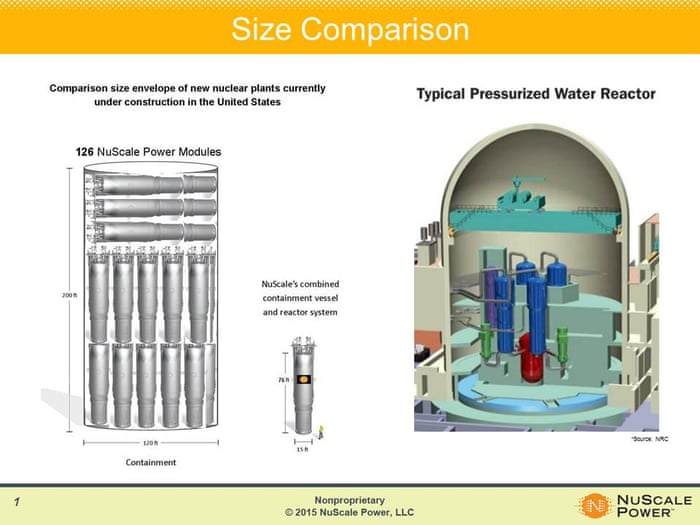
The compact design and other modern improvements, including the ability to install all parts in a factory rather than on a construction site, potentially make small modular reactors much easier to build than conventional nuclear power plants which cost around $10bn and take a decade to obtain permits and build. At a time when a significant number of existing nuclear power plants are struggling financially
“From an investment standpoint, this makes it easier to do because you don't have to put all the money up front; you can stagger when you build them,” said Gene Grecheck, a former president and the current co-chair of a policy advisory committee at the American Nuclear Society, which represents engineers and scientists. Grecheck said researchers are looking at other ways of improving nuclear technology.
The research is critical in deciding whether the design of small nuclear reactors has a strong business case. Emerging technology is designed to make nuclear power plants cheaper and safer. No pollutants are emitted by nuclear power plants, but modern models have become too costly to be a common climate change solution. The new technology has received substantial support from investors including Bill Gates.
The Utah team is not alone in the new technology development. In May, the Tennessee Valley Authority, which supplies power to nine million people in seven southeastern states, became the first to apply for a permit from the Nuclear Regulatory Commission to create a small nucleus.
The compact design and other modern improvements, including the ability to install all parts in a factory rather than on a construction site, potentially make small modular reactors much easier to build than conventional nuclear power plants which cost around $10bn and take a decade to obtain permits and build. At a time when a significant number of existing nuclear power plants are struggling financially
“From an investment standpoint, this makes it easier to do because you don't have to put all the money up front; you can stagger when you build them,” said Gene Grecheck, a former president and the current co-chair of a policy advisory committee at the American Nuclear Society, which represents engineers and scientists. Grecheck said researchers are looking at other ways of improving nuclear technology.
The research is critical in deciding whether the design of small nuclear reactors has a strong business case. Emerging technology is designed to make nuclear power plants cheaper and safer. No pollutants are emitted by nuclear power plants, but modern models have become too costly to be a common climate change solution. The new technology has received substantial support from investors including Bill Gates.
The Utah team is not alone in the new technology development. In May, the Tennessee Valley Authority, which supplies power to nine million people in seven southeastern states, became the first to apply for a permit from the Nuclear Regulatory Commission to create a small nucleus.
Monday, 2 December 2019
SAG-2019 NEPAL
- The 2019 South Asian Games, formally the XIII South Asian Games, is a major multi-sport event initially scheduled to take place in Kathmandu, Pokhara and Janakpur Nepal from March 9 to 18, 2019. However, the dates have been postponed and the competition will take place from December 1-10, 2019. The new dates were announced at the Executive Board meeting of the South Asian Olympic Council in Bangkok on 1 March 20.
- Venues
- Three different cities in Nepal hosted the competition, Kathmandu, Pokhara and Janakpur.
- Pokhara
- Kathmandu
- Janakpur
- Location of events in 2019 South Asian Games in Nepal

- Dasarath Rangasala Stadium, Kathmandu

- Pokhara Stadium

- TU Cricket Ground
- Kathmandu
Venue Sport(s) Dasarath Stadium Athletics
Football (men)International Sports Complex, Satdobato Boxing
Karate
Shooting
Squash
Swimming
Taekwondo
TennisCovered Hall, Tripureshwor Basketball
VolleyballTU Cricket Ground Cricket (men) Sahid Park, Gokarna Cycling (mountain biking) Ring Road Cycling Covered Hall, Kirtipur Fencing Gokarna Forest Resort Golf Army Physical Fitness Centre, Lagankhel Judo
WushuAPF Hall, Halchowk Kabaddi Naya Bazar Kirtipur Kho-kho Table Tennis Hall, Lainchaur Table Tennis - Pokhara
Venue Sport(s) Badminton Covered Hall, Pokhara Badminton Pokhara Cricket Ground Cricket (women) Pokhara Stadium Archery
Football (women)Pokhara Covered Hall Handball Basundhara Park Triathlon Barahighat Beach volleyball Matepani Weightlifting - Janakpur
Venue Sport(s) Janakpur Covered Hall Wrestling


Sunday, 1 December 2019
Cookies notification in European Union countries
European Union laws require you to give European Union visitors information about cookies used and data collected on your blog. In many cases, these laws also require you to obtain consent.
As a courtesy, we have added a notice on your blog to explain Google's use of certain Blogger and Google cookies, including use of Google Analytics and AdSense cookies, and other data collected by Google.
You are responsible for confirming this notice actually works for your blog, and that it displays. If you employ other cookies, for example by adding third party features, this notice may not work for you. If you include functionality from other providers there may be extra information collected from your users.
Learn more about this notice and your responsibilities.
As a courtesy, we have added a notice on your blog to explain Google's use of certain Blogger and Google cookies, including use of Google Analytics and AdSense cookies, and other data collected by Google.
You are responsible for confirming this notice actually works for your blog, and that it displays. If you employ other cookies, for example by adding third party features, this notice may not work for you. If you include functionality from other providers there may be extra information collected from your users.
Learn more about this notice and your responsibilities.
BJP in Maharashtra crashed in the rush of Fadnavis to come to power
President Senior Shiv Sena Sanjay Raut said former ch on Sunday.That Former Chief Minister Devendra Fandnavis haste to attain the power and chaldish comment on the current rulling parties .
for further details : https://timesofindia.indiatimes.com/politics/news/fadnavis-haste-to-come-to-power-sank-bjp-in-maharashtra-sanjay-raut/articleshow/72315801.cms
Let's wake up we the general people are the real ruler of the country .
Wednesday, 10 April 2019
Thursday, 4 April 2019
Tuesday, 26 February 2019
Monday, 4 February 2019
Astronomers Creep Up to the Edge of the Milky Way’s Black Hole
for the first time, scientists have spotted something wobbling around the black hole at the core of our galaxy. Their measurements suggest that this stuff — perhaps made of blobs of plasma — is spinning not far from the innermost orbit allowed by the laws of physics. If so, this affords astronomers their closest look yet at the fun-house-mirrored space-time that surrounds a black hole. And in time, additional observations will indicate whether those known laws of physics truly describe what’s going on at the edge of where space-time breaks down.
Astronomers already knew that the Milky Way hosts a central black hole, weighing some four million suns. From Earth, this black hole is a dense, tiny thing in the constellation Sagittarius, only as big on the sky as a strawberry seed in Los Angeles when viewed from New York. But interstellar gas glows as it swirls into the black hole, marking the dark heart of the galaxy with a single, faint point of infrared light in astronomical images. Astronomers call it Sagittarius A* (pronounced “A-star”).
For 15 years researchers have watched that point flicker — and wondered why. Occasionally, it flares up 30 times brighter in infrared light and then subsides, all within just a few minutes. Now, though, a team based at the Max Planck Institute for Extraterrestrial Physics in Garching, Germany, has measured not just this speck’s brightness but its position with staggering precision. When it flares, it also moves clockwise on the sky, tracing out a tiny circle, they find.
“They have clearly seen something moving,” said Shep Doeleman, an astronomer at the Harvard-Smithsonian Center for Astrophysics who did not participate in what he calls the team’s “extraordinary” measurements, which will be published tomorrow in Astronomy & Astrophysics. “What it is, is not exactly clear.”
But one particular interpretation stands out, the team argues. This wobbling likely comes from “hot spots,” glowing blobs of magnetically heated plasma orbiting right above the black hole’s gaping maw at almost one-third the speed of light. As these hot spots circle, the black hole’s immense gravitational forces twist space-time itself into something like a lens, one that flashes beacons of light across the cosmos like a galactic searchlight beam. The idea, first proposed in 2005 by Avery Broderick, now at the Perimeter Institute of Theoretical Physics and the University of Waterloo in Canada, and Avi Loeb of Harvard University, would explain why the black hole appears to flare.
“It seems like they’ve got something really exciting here,” added astronomer Andrea Ghez, a longtime competitor to the European team at the University of California, Los Angeles.
If these rotating flares are due to hot spots in the way that Broderick and Loeb imagined, additional flares will help reveal the black hole’s “spin,” a measure of its rotation. And it could also provide a new way to poke and prod Einstein’s theory of general relativity in the flexed space-time at the mouth of a black hole.
“To occasionally be right makes up for all the other times when I scratched my head at the blackboard,” said Broderick. “This is what makes being a scientist so much fun.”
Friday, 27 July 2018
New horizons for osteopathic treatment
Novel osteopathic strategies are highly desired to treat osteoporosis bone loss or augment fracture repair in patients at risk of healing complications, including individuals with osteoporosis or inflammatory disorders. Whereas current osteoanabolics address osteoblast function, research by Ren Xu and colleagues highlights the skeletal endothelium as a promising target to promote bone formation.
Saturday, 21 April 2018
Page semi-protected 2018 Indian Premier League
| Dates | 7 April – 27 May 2018 |
|---|---|
| Administrator(s) | Board of Control for Cricket in India (BCCI) |
| Cricket format | Twenty20 |
| Tournament format(s) | Double round robin and playoffs knockout |
| Host(s) |  India India |
| Participants | 8 |
| Matches played | 60 |
| Official website | www |
| UDRS | Yes |
The 2018 season of the Indian Premier League, also known as IPL 11, is the current eleventh season of the IPL, a professional Twenty20 cricket league established by the BCCI in 2007. The season, which is being held from 7 April to 27 May, saw the return of the Chennai Super Kings and the Rajasthan Royalsafter serving two years of suspension for the involvement of their respective owners in the 2013 IPL betting case. Star Sports purchased the media rights at ₹16,347.5 crore ($2.55 billion) for five years starting from 2018.
Background
This was the first season of the IPL to use DRS.[2] IPL Fanpark, a initiative where matches are hosted in stadium on a large screen has been planned to be held across 36 cities in 19 states across the India.[3]This season also will introduce Mid-season transfers. The Transfer window will be a short five-day transfer window applicable only for uncapped players who have played not more than two matches at the halfway mark of the tournament.[4] The season had a single opening ceremony, unlike 2017 IPL before the first match on 7th April. The ceremony included performances by Varun Dhawan, Prabhu Deva, Mika Singh, Tamannaah Bhatia, Jacqueline Fernandez and Hrithik Roshan.[5]
The IPL matches in Chennai were threatened due to Kaveri River water dispute protests in 2018.[6] Madras high court issued a notice to BCCI after a PIL was filed seeking stay on IPL.[7]
Format
Eight teams are scheduled to play in 2018. The tournament involves each team playing every other team twice in a home-and-away, double round-robin format. At the conclusion of the double round-robin league, the top four teams on the basis of aggregate points qualify for the playoffs. In this stage, the top two teams compete with each other (in a match titled "Qualifier 1"), as do the remaining two teams (in a match titled "Eliminator"). While the winner of Qualifier 1 directly qualifies for the final match, the losing team gets another chance to qualify for the final match by playing the winning team of the Eliminator match; this match is titled Qualifier 2. The winner of this subsequent Qualifier 2 match moves onto the final match. The team that wins the final match is crowned the Indian Premier League winners.The schedule for the tournament was published on 14 February 2018.[8]
Broadcast
Star Sports won the global media rights at ₹16,347.5 crore ($2.55 billion) for five years starting from 2018.[1] In India, the tournament will be broadcast on Star Network channels in six languages(English, Hindi, Tamil, Telugu, Kannada and Bengali).[9] For the first time, IPL would also be broadcast on public broadcaster Doordarshan.[10] The TV rights for rest of the world were won by Willow TV for US and Canada, Sky Sports for UK, Fox Sports for Australia, Sky Sport for New Zealand, SuperSport for sub Saharan Africa, beIN Sports for Middle-East and North America, Flow TV for Caribbean, Geo Super for Pakistan, Channel 9 for Bangladesh and Lemar TV for Afghanistan.[9] The radio rights were won by Cricket Radio globally(except Indian subcontinent), 89.1 Radio 4 FM and Gold 101.3 FM for US and Talksport for UK.[9]Star's digital platform Hotstar held the digital rights for India, US and Canada. The digital rights for rest of the world were won by Sky Sports for UK, Fox Sports for Australia, Sky Sport for New Zealand, SuperSport for sub Saharan Africa, beIN Sports for Middle-East and North America, Flow TV for Caribbean, Geo Super for Pakistan, Channel 9 for Bangladesh and YuppTV for Australia, Europe, SE Asia & South America.[9] Star India also announced its plan to broadcast IPL in Virtual Reality.[11]
Venues
Ten venues were selected to host the matches. The opening match and the final will be played at the Wankhede Stadium in Mumbai. The venues for the two playoffs were not announced initially due to the norm of allotting the Eliminator and second qualifier to the home stadium of last season's runner-up, and the fact that the 2017 runner-up, Rising Pune Supergiant were no longer a part of the IPL. [12] Later, both playoffs were allotted to Pune.[13]
Per the original schedule, all teams except for Kings XI Punjab, would play their home games at their traditional home venues. Kings XI were scheduled to play three of their home games in Indore and the other four games in Mohali.[8] The schedule was later changed due to logistical issues owing to the temporary closure of Chandigarh Airport, and as a result, Kings XI would play three of their home games in Mohali and the other four games in Indore making an exception to the rule of playing at least four home matches at their designated home venue.[14] On 11 April, the IPL governing council announced that Chennai's six remaining home matches would be held in Pune instead due to security concerns resulting from the protests for the Cauvery water dispute.
Saturday, 14 April 2018
Boeing HorizonX Invests in Reaction Engines, a UK Hypersonic Propulsion Company
Boeing has announced its investment in Reaction Engines Limited, a leader in advanced propulsion systems based in Oxfordshire, United Kingdom. Reaction Engines' technology will contribute to the next generation of hypersonic flight and space access vehicles.
Reaction Engines is known for its Synergetic Air-Breathing Rocket Engine (SABRE), a hybrid engine blending jet and rocket technology that is capable of Mach 5 in air-breathing mode and Mach 25 in rocket mode for space flight. As part of the SABRE program, Reaction Engines developed an ultra-lightweight heat exchanger that stops engine components from overheating at high speeds, thus improving access to hypersonic flight and space.
"As Reaction Engines unlocks advanced propulsion that could change the future of air and space travel, we expect to leverage their revolutionary technology to support Boeing's pursuit of hypersonic flight," said Steve Nordlund, vice president of Boeing HorizonX.
Founded by three propulsion engineers in 1989, Reaction Engines produces robust technical designs for advanced heat exchangers, air-breathing engines, and the vehicles they could power. These capabilities may lead to high-speed point-to-point transport that is cost-effective and sustainable.
"Boeing is a world-leader in many fields, bringing invaluable expertise in hypersonic research and space systems. I am thrilled and honored that Boeing HorizonX has chosen Reaction Engines as its first UK investment," said Mark Thomas, CEO of Reaction Engines.
"This is a very exciting step that will contribute to our efforts to develop a commercial technology business and accelerate opportunities to further the future of air and space travel through SABRE technology."
Boeing HorizonX Ventures participated in this $37.3 million Series B funding round alongside Rolls-Royce Plc and BAE Systems.
The Boeing HorizonX Ventures investment portfolio is made up of companies specializing in technologies for aerospace and manufacturing innovations, including autonomous systems, energy storage, advanced materials, augmented reality systems and software, machine learning, hybrid-electric propulsion and Internet of Things connectivity.
Boeing is the world's largest aerospace company and leading manufacturer of commercial jetliners and defense, space and security systems. A top U.S. exporter, the company supports airlines and U.S. and allied government customers in more than 150 countries.
Boeing employs more than 2,200 people across the UK at numerous sites, and in 2018 the company celebrates 80 years of partnership with British customers, suppliers, manufacturing, the Armed Forces and the air transport industry. Today, the UK remains a critically important market, supplier base and a source of some of the world's most innovative technology partners.
Tuesday, 27 March 2018
Personality Traits
The Big Five personality traits, also known as the five factor model (FFM), is a model based on common language descriptors of personality. When factor analysis (a statistical technique) is applied to personality survey data, some words used to describe aspects of personality are often applied to the same person. For example, someone described as conscientious is more likely to be described as "always prepared" rather than "messy". This theory is based therefore on the association between words but not on neuropsychological experiments. This theory uses descriptors of common language and therefore suggests five broad dimensions commonly used to describe the human personality and psyche.[1][2] The five factors have been defined as openness to experience, conscientiousness, extraversion, agreeableness, and neuroticism, often represented by the acronyms OCEAN or CANOE. Beneath each proposed global factor, there are a number of correlated and more specific primary factors. For example, extraversion is said to include such related qualities as gregariousness, assertiveness, excitement seeking, warmth, activity, and positive emotions.
That these underlying factors can be found is consistent with the lexical hypothesis: personality characteristics that are most important in peoples' lives will eventually become a part of their language and, secondly, that more important personality characteristics are more likely to be encoded into language as a single word.
The five factors are:
- Openness to experience (inventive/curious vs. consistent/cautious). Appreciation for art, emotion, adventure, unusual ideas, curiosity, and variety of experience. Openness reflects the degree of intellectual curiosity, creativity and a preference for novelty and variety a person has. It is also described as the extent to which a person is imaginative or independent and depicts a personal preference for a variety of activities over a strict routine. High openness can be perceived as unpredictability or lack of focus, and more likely to engage in risky behaviour or drug taking.[4]Also, individuals that have high openness tend to lean towards being artists or writers in regards to being creative and appreciate the significance of the intellectual and artistic pursuits.[5] Moreover, individuals with high openness are said to pursue self-actualization specifically by seeking out intense, euphoric experiences. Conversely, those with low openness seek to gain fulfillment through perseverance and are characterized as pragmatic and data-driven—sometimes even perceived to be dogmatic and closed-minded. Some disagreement remains about how to interpret and contextualize the openness factor.
- Conscientiousness (efficient/organized vs. easy-going/careless). A tendency to be organized and dependable, show self-discipline, act dutifully, aim for achievement, and prefer planned rather than spontaneous behavior. High conscientiousness is often perceived as stubbornness and obsession. Low conscientiousness is associated with flexibility and spontaneity, but can also appear as sloppiness and lack of reliability.
- Extraversion (outgoing/energetic vs. solitary/reserved). Energy, positive emotions, surgency, assertiveness, sociability and the tendency to seek stimulation in the company of others, and talkativeness. High extraversion is often perceived as attention-seeking, and domineering. Low extraversion causes a reserved, reflective personality, which can be perceived as aloof or self-absorbed.[6] Extroverted people tend to be more dominant in social settings, opposed to introverted people who may act more shy and reserved in this setting.
- Agreeableness (friendly/compassionate vs. challenging/detached). A tendency to be compassionate and cooperative rather than suspicious and antagonistic towards others. It is also a measure of one's trusting and helpful nature, and whether a person is generally well-tempered or not. High agreeableness is often seen as naive or submissive. Low agreeableness personalities are often competitive or challenging people, which can be seen as argumentativeness or untrustworthiness.[6]
- Neuroticism (sensitive/nervous vs. secure/confident). Neuroticism identifies certain people who are more prone to psychological stress. The tendency to experience unpleasant emotions easily, such as anger, anxiety, depression, and vulnerability. Neuroticism also refers to the degree of emotional stability and impulse control and is sometimes referred to by its low pole, "emotional stability". A high stability manifests itself as a stable and calm personality, but can be seen as uninspiring and unconcerned. A low stability expresses as a reactive and excitable personality, often very dynamic individuals, but they can be perceived as unstable or insecure.[6] It has also been researched that individuals with higher levels of tested neuroticism, tend to have worse psychological well being.[9]
Sample items
- I have excellent ideas.
- I am quick to understand things.
- I use difficult words.
- I am full of ideas.
- I am not interested in abstractions. (reversed)
- I do not have a good imagination. (reversed)
- I have difficulty understanding abstract ideas. (reversed)
Sample items
- I am always prepared.
- I pay attention to details.
- I get chores done right away.
- I like order.
- I follow a schedule.
- I am exacted in my work.
- I leave my belongings around. (reversed)
- I make a mess of things. (reversed)
- I often forget to put things back in their proper place. (reversed)
- I shirk my duties. (reversed)
Sample items
- I am the life of the party.
- I don't mind being the center of attention.
- I feel comfortable around people.
- I start conversations.
- I talk to a lot of different people at parties.
- I don't talk a lot. (reversed)
- I think a lot before I speak or act. (reversed)
- I don't like to draw attention to myself. (reversed)
- I am quiet around strangers. (reversed)
- I have no intention of talking in large crowds. (reversed)
Sample items
- I am interested in people.
- I sympathize with others' feelings.
- I have a soft heart.
- I take time out for others.
- I feel others' emotions.
- I make people feel at ease.
- I am not really interested in others. (reversed)
- I insult people. (reversed)
- I am not interested in other people's problems. (reversed)
- I feel little concern for others. (reversed)
Sample items
- I get irritated easily.
- I get stressed out easily.
- I get upset easily.
- I have frequent mood swings.
- I worry about things.
- I am much more anxious than most people.
- I am relaxed most of the time. (reversed)
- I seldom feel blue. (reversed)
People who don't exhibit a clear tendency towards specific characteristics chosen from the above-mentioned related pairs in all five dimensions are considered adaptable, moderate and reasonable personalities, but can be perceived as unprincipled, inscrutable and calculating.
The Big five personality traits was the model to comprehend the relationship between personality and academic behaviors.[ This model was defined by several independent sets of researchers. These researchers began by studying relationships between a large number of known personality traits. They reduced the lists of these traits (arbitrarily) by 5–10 fold and then used factor analysis to group the remaining traits (using data mostly based upon people's estimations, in self-report questionnaire and peer ratings) in order to find the underlying factors of personality.
The initial model was advanced by Ernest Tupes and Raymond Christal in 1961. but failed to reach an academic audience until the 1980s. In 1990, J.M. Digman advanced his five-factor model of personality, which Lewis Goldberg extended to the highest level of organization. These five overarching domains have been found to contain and subsume most known personality traits and are assumed to represent the basic structure behind all personality traits.
At least four sets of researchers have worked independently for decades on this problem and have identified generally the same five factors: Tupes and Christal were first, followed by Goldberg at the Oregon Research Institute,[Cattell at the University of Illinois, and Costa and McCrae at the National Institutes of Health. These four sets of researchers used somewhat different methods in finding the five traits, and thus each set of five factors has somewhat different names and definitions. However, all have been found to be highly inter-correlated and factor-analytically aligned.[Studies indicate that the Big Five traits are not nearly as powerful in predicting and explaining actual behavior as are the more numerous facets or primary traits.
Each of the Big Five personality traits contains two separate, but correlated, aspects reflecting a level of personality below the broad domains but above the many facet scales that are also part of the Big Five. The aspects are labeled as follows: Volatility and Withdrawal for Neuroticism; Enthusiasm and Assertiveness for Extraversion; Intellect and Openness for Openness to Experience; Industriousness and Orderliness for Conscientiousness; and Compassion and Politeness for Agreeableness.
Openness is a general appreciation for art, emotion, adventure, unusual ideas, imagination, curiosity, and variety of experience. People who are open to experience are intellectually curious, open to emotion, sensitive to beauty and willing to try new things. They tend to be, when compared to closed people, more creative and more aware of their feelings. They are also more likely to hold unconventional beliefs.
A particular individual, however, may have a high overall openness score and be interested in learning and exploring new cultures but have no great interest in art or poetry.
Conscientiousness is a tendency to display self-discipline, act dutifully, and strive for achievement against measures or outside expectations. It is related to the way in which people control, regulate, and direct their impulses. High scores on conscientiousness indicate a preference for planned rather than spontaneous behavior.The average level of conscientiousness rises among young adults and then declines among older adults.
Extraversion is characterized by breadth of activities (as opposed to depth), surgency from external activity/situations, and energy creation from external means. The trait is marked by pronounced engagement with the external world. Extraverts enjoy interacting with people, and are often perceived as full of energy. They tend to be enthusiastic, action-oriented individuals. They possess high group visibility, like to talk, and assert themselves.
Introverts have lower social engagement and energy levels than extraverts. They tend to seem quiet, low-key, deliberate, and less involved in the social world. Their lack of social involvement should not be interpreted as shyness or depression; instead they are more independent of their social world than extraverts. Introverts need less stimulation than extraverts and more time alone. This does not mean that they are unfriendly or antisocial; rather, they are reserved in social situations.
Generally, people are a combination of extraversion and introversion, with personality psychologist Eysenck suggesting that these traits are connected somehow to our central nervous system[
The agreeableness trait reflects individual differences in general concern for social harmony. Agreeable individuals value getting along with others. They are generally considerate, kind, generous, trusting and trustworthy, helpful, and willing to compromise their interests with others.[45] Agreeable people also have an optimistic view of human nature.
Disagreeable individuals place self-interest above getting along with others. They are generally unconcerned with others' well-being, and are less likely to extend themselves for other people. Sometimes their skepticism about others' motives causes them to be suspicious, unfriendly, and uncooperative.
Because agreeableness is a social trait, research has shown that one's agreeableness positively correlates with the quality of relationships with one's team members. Agreeableness also positively predicts transformational leadership skills. In a study conducted among 169 participants in leadership positions in a variety of professions, individuals were asked to take a personality test and have two evaluations completed by directly supervised subordinates. Leaders with high levels of agreeableness were more likely to be considered transformational rather than transactional. Although the relationship was not strong, (r=0.32, β=0.28, p<0.01) it was the strongest of the Big Five traits. However, the same study showed no predictive power of leadership effectiveness as evaluated by the leader's direct supervisor.[48]Agreeableness, however, has been found to be negatively related to transactional leadership in the military. A study of Asian military units showed leaders with a high level of agreeableness to be more likely to receive a low rating for transformational leadership skills.[49] Therefore, with further research organizations may be able to determine an individual's potential for performance based on their personality traits.
Neuroticism is the tendency to experience negative emotions, such as anger, anxiety, or depression. It is sometimes called emotional instability, or is reversed and referred to as emotional stability. According to Eysenck's (1967) theory of personality, neuroticism is interlinked with low tolerance for stress or aversive stimuli.[51] Neuroticism is a classic temperament trait that has been studied in temperament research for decades, before it was adapted by the FFM . Since main properties of temperament traits are stability in life time and its neurophysiological basis, the FFM researchers used these properties of Neuroticism to support their model. Those who score high in neuroticism are emotionally reactive and vulnerable to stress, they also tend to be flippant in the way they express emotion. They are more likely to interpret ordinary situations as threatening, and minor frustrations as hopelessly difficult. Their negative emotional reactions tend to persist for unusually long periods of time, which means they are often in a bad mood. For instance, neuroticism is connected to a pessimistic approach toward work, confidence that work impedes personal relationships, and apparent anxiety linked with work. Furthermore, those who score high on neuroticism may display more skin-conductance reactivity than those who score low on neuroticism.[51][54] These problems in emotional regulation can diminish the ability of a person scoring high on neuroticism to think clearly, make decisions, and cope effectively with stress.[citation needed] Lacking contentment in one's life achievements can correlate with high neuroticism scores and increase one's likelihood of falling into clinical depression. Moreover, individuals high in neuroticism tend to experience more negative life events, but neuroticism also changes in response to positive and negative life experiences.
At the other end of the scale, individuals who score low in neuroticism are less easily upset and are less emotionally reactive. They tend to be calm, emotionally stable, and free from persistent negative feelings. Freedom from negative feelings does not mean that low-scorers experience a lot of positive feelings.
Neuroticism is similar but not identical to being neurotic in the Freudian sense (i.e., neurosis.) Some psychologists prefer to call neuroticism by the term emotional instability to differentiate it from the term neurotic in a career test.
Subscribe to:
Posts (Atom)


